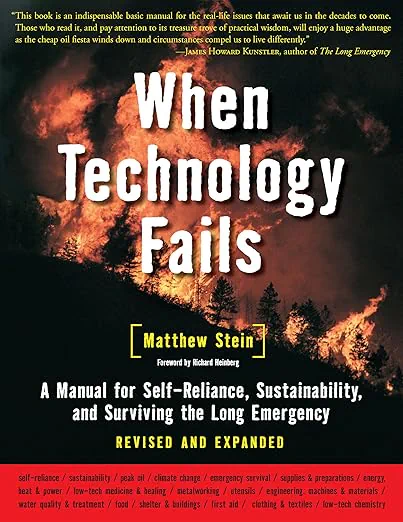
Stein, who holds degrees from MIT and Harvard, explains that he received the concept for his book during a flash of intuitive inspiration during meditation. He covers renewable energy options for homeowners, from solar panels and wind turbines to micro-hydro systems using backyard creeks. He also discusses bio-intensive farming methods developed by John Jevons that use one-fifth the water of conventional agriculture and can transform arid land into productive gardens.
The discussion touches on the fragility of interconnected systems, from nuclear reactors with single-point failures to antibiotic-resistant bacteria bred through livestock overmedication. Art and Matthew agree that the pendulum of technological dependence is swinging and that within a decade, current disruptions will seem mild by comparison.
Key Moments
Stein Says Divine Inspiration Drove the Book: Matthew Stein, a 25-year mechanical engineer with about ten patents, tells Art the writing of When Technology Fails was guided each morning by what felt like a higher power telling him a large number of people would need this book within ten years.
Three Mile Island Was Closer to Chernobyl Than Reported: Stein, who lived near Three Mile Island during the accident, recounts that 90 percent of the fuel went into meltdown and that scientists still cannot figure out why it did not become a Chernobyl-style disaster - which would have ended the U.S. nuclear program.
Antibiotic Overuse Is Breeding Mad Cow and AIDS-Class Threats: Stein argues livestock receive ten times more antibiotics than humans, breeding resistant pathogens, and links this to mad cow as a species-jumping disease that literally eats the brain - then references the Rolling Stone contention that AIDS may have been spread through smallpox vaccinations in Africa.
Peak Oil Within 20 Years - Plan With the End in Mind: Stein invokes Stephen Covey's 'begin with the end in mind' to argue Americans must plan now for global oil production decline within a decade or two, predicting gasoline bills 10-20 times higher and citing California's 46 percent rate hike as the first taste of the coming squeeze.
Earthquake in Birthday Suit and the Fire Behind the House: Stein recounts two personal close-calls - sleeping nude during a Truckee earthquake with no clothes or car keys outside, and looking up from his computer to see a 500-foot plume of smoke 100 yards from his house - that taught him to stash keys and clothing outside.
Preserved source
From the original ArtBell.com archive
The 2003 commemorative archive preserves the contemporary listing for this broadcast. Links and descriptions reflect the original site and may be outdated.
View the original program listingBooks by This Guest
Selected titles from the guest bibliography. Use them as context for this appearance, not required listening.