March 20, 2002: The Time Machine - Arnold Leibovit | Cellular Memory - Dr. Paul Pearsall
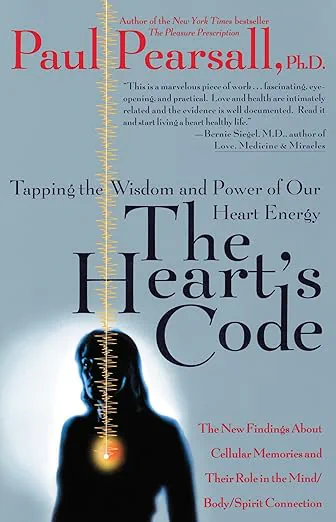
In the second half, Art welcomes Dr. Paul Pearsall, a clinical neuropsychologist and bone marrow transplant survivor, who presents research on cellular memory in organ transplant recipients. Dr. Pearsall describes cases where heart recipients experienced memories belonging to their donors, including a young girl who knew her donor's name and dreamed of the circumstances of the donor's death. He explains that the heart contains 40,000 neurons, produces an electromagnetic field 5,000 times stronger than the brain, and reacts to stimuli faster than the brain does.
Dr. Pearsall shares a remarkable story of a donor mother who met her son's heart recipient, a young boy who whispered details about the donor family that he could not have known. The research, published in the Journal of Integrative Medicine, challenges conventional assumptions about consciousness and memory.
Key Moments
H.G. Wells's great-grandson Simon directs the new Time Machine: Producer Arnold Leibovit confirms that Simon Wells - great-grandson of H.G. Wells - was hired to direct the 2002 remake of The Time Machine without knowing his lineage was a factor. Wells's family connection only surfaced after he was already attached.
The heart's electromagnetic field is 5,000x the brain's: Dr. Pearsall lays out the physical case that the heart is far more than a pump: 100,000 beats a day, vessels that wrap the planet 2.5 times, and an electromagnetic field 5,000 times stronger than the brain's that magnetometers can detect ten feet from the body.
Little girl identifies her donor's killer in dreams: Pearsall recounts a child heart-transplant recipient who told him her donor was named 'Krista' (a private nickname) and described recurring nightmares of being struck in the head with a hammer by a man behind a church - which Pearsall says matched how the donor had actually been killed.
Danny and Danielle: poet donor, guitar-playing recipient: Pearsall reads verbatim tape from an 18-year-old donor's father (Danny wrote poems at 12 foreseeing his death and donating his heart) and from the 8-year-old recipient Danielle, who could finish phrases of Danny's songs she had never heard and suddenly play guitar she had never touched.
Would you take a mass murderer's heart?: Art presses the dark side of the thesis: what if the donor was a violent person? Pearsall says he'd take such a heart 'in a New York minute' since the recipient's 75 trillion existing cells set the tone, then describes a real case where a passive husband became aggressive and cussing after receiving the heart of a former prisoner.
Preserved source
From the original ArtBell.com archive
The 2003 commemorative archive preserves the contemporary listing for this broadcast. Links and descriptions reflect the original site and may be outdated.
View the original program listingBooks by This Guest
Selected titles from the guest bibliography. Use them as context for this appearance, not required listening.