
Cremo outlines a radical alternative to both Darwinian evolution and biblical creationism, proposing a cosmic hierarchy of beings responsible for seeding life on Earth through consciously directed processes. He draws on ancient Sanskrit writings describing 400,000 human species scattered throughout the universe and civilizations stretching back billions of years. The discussion also touches on the suppression faced by geologist Virginia Steen McIntyre and psychiatrist John Mack at Harvard for challenging mainstream paradigms.
A provocative exploration of forbidden archaeology that challenges every assumption about where humanity came from and who has been hiding the evidence.
Key Moments
Mary Leakey's 3.6 million-year-old human footprints: Cremo cites Mary Leakey's 1979 Tanzania discovery of footprints indistinguishable from modern human prints - in rock dated 3.6 million years old, while contemporaneous ape-man foot bones in museums do not fit the prints.
2.8 billion-year-old grooved metal spheres in South African mine: Cremo's oldest cited artifact: grooved diamond-hard metal spheres found by Otostalen, South Africa miners in 2.8-billion-year-old pyrophyllite deposits, displayed at the Klerksdorp Natural History Museum.
California gold-rush miners found human skeletons in 50M-year rock: Cremo invokes J.D. Whitney, California's state geologist, who in an 1880 Harvard-published volume documented human skeletons and obsidian spear points pulled from tunnels in 10-50 million-year-old rock.
Geologist Virginia Steen-McIntyre dated Mexican tools at 250,000 years: Cremo describes how USGS geologist Virginia Steen-McIntyre and three colleagues used four dating methods on Hueyatlaco, Mexico tools and got 250,000 years - then she lost her teaching position and was driven out of geology for sticking to the dates.
Harvard secretly investigating John Mack over abductions: Cremo reveals Harvard has convened a secret academic committee that has labeled Mack 'irresponsible as a scholar,' with his attorneys saying the report will be used to attack his tenure and possibly bring a malpractice suit; Mack has until March 15 to respond.
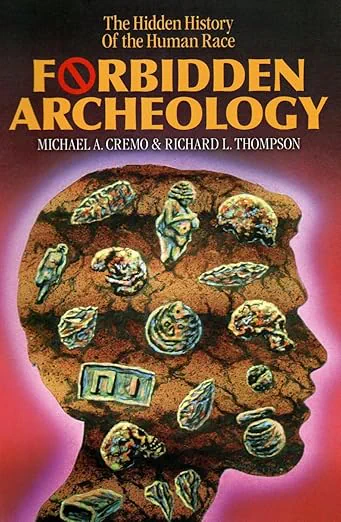
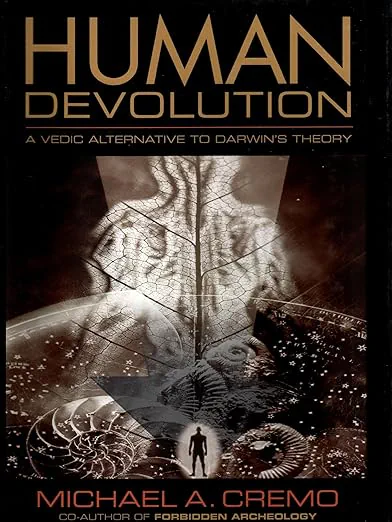
Books by This Guest
Selected titles from the guest bibliography. Use them as context for this appearance, not required listening.
Continue exploring
Paths out of this episode
A stronger next move anchored to this specific broadcast.