
The discussion shifts to Mars, where Sir Charles presents his research into what he identifies as fossil formations captured by NASA rovers. He walks through the photographic evidence methodically, pointing to structures in Martian rock that bear striking resemblance to terrestrial fossils. Art presses him on the distinction between geological formations and genuine biological remnants, and the two examine how mainstream science has received these claims.
The program opens with listener calls covering 9/11 conspiracy theories, a mysterious wheat virus sweeping western Kansas, and Portugal placing its military on alert after a UFO sighting. Art also reads a SETI response explaining why humanity has not transmitted signals to other civilizations.
Key Moments
The space elevator pitch: Shults explains how fullerene-whisker cables, with tensile strength higher than diamond, could enable a working space elevator and drop launch costs to a few tens of dollars per pound.
Solar power satellites the size of Manhattan: Shults details infrared-laser power transmission from orbit, calculating that a Manhattan-sized collector could deliver roughly 47 gigawatts of usable electricity to a ground receiver.
Why we are really in Iraq: Bell argues bluntly that the Iraq War is about oil, and that a few billion dollars diverted from defense spending could fund space-based solar power instead.
NASA's Mars stone wall: Shults says NASA has gone silent on his fossil findings, claiming the agency would lose face and funding by reversing earlier denials and that ignoring controversial evidence to death is now standard practice.
Liquid water observed under Mars conditions: Shults cites Gil Levin's vacuum-chamber work showing liquid water can persist at Martian surface temperatures and pressures, undercutting decades of textbook claims that Mars is too dry and cold for life.
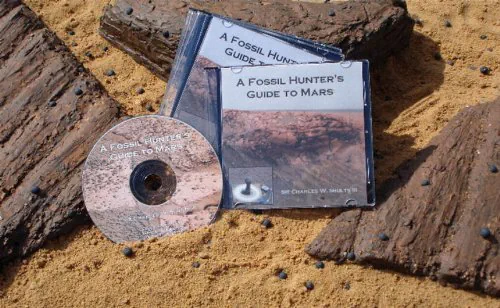
Books by This Guest
Selected titles from the guest bibliography. Use them as context for this appearance, not required listening.
Continue exploring
Paths out of this episode
A stronger next move anchored to this specific broadcast.