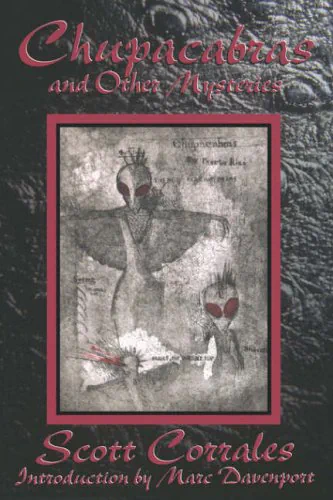
The conversation examines the creature's spread from the Caribbean to Mexico, Central America, and even Spain and Portugal, where authorities acknowledged it as a likely culprit in mass livestock deaths. Corrales details its apparent ability to float rather than fly, its sulfuric odor, and radiation signatures left at attack sites in both Puerto Rico and Guatemala.
Art and Corrales explore competing theories, including government genetic experiments, interdimensional beings, ritual magic, and the paranormal cycle that mirrors historical precedents like the 1970s Moca Vampire. Callers contribute their own encounters with Bigfoot and mysterious creatures, while Corrales notes similar cryptid traditions extending from the Andes to the Pyrenees.
Key Moments
Phenomenon jumps to Spain and Portugal, December 1996: Corrales reports that researcher Bruno Cardenosa documented entire flocks of sheep mutilated or vanishing in Zaragoza, Spain in December 1996, with Spanish authorities themselves invoking the chupacabras since Spain has no bears or wolves left to blame.
Origin point: Orocovis, Puerto Rico, March 1995: Corrales pins the modern wave's start to March 1995, when a WKAQ TV reporter began covering sheep found drained of blood in Orocovis, a town in the center of the island, alongside witness reports of small gray-like entities and tree-dwelling beings emitting sibilant sounds.
Kangaroo body, wraparound red eyes: the canonical chupacabra description: Corrales walks Bell through the composite eyewitness description put together by Puerto Rican researcher Jorge Martin in 1995: kangaroo-like body, humanoid head with wraparound red eyes, vibrating quills down the back, scrawny forearms, and a membrane under the arms that lets it float rather than fly.
Proboscis through the neck, animals left perfectly hollow: Corrales describes the creature's most distinctive feature, a proboscis extending from its mouth used to puncture victims, and confirms autopsies showed many animals were not just exsanguinated but left 'perfectly hollow' with internal organs removed through a single orifice.
Body count: over a thousand animals in Puerto Rico, hundreds more in Spain: Pressed by Bell on the scale, Corrales gives concrete numbers: well over a thousand affected animals in Puerto Rico alone, hundreds of sheep in Spain, plus uncounted cases in Mexico and Central America, ranging from racehorses down to household cats and dogs.
Preserved source
From the original ArtBell.com archive
The 2003 commemorative archive preserves the contemporary listing for this broadcast. Links and descriptions reflect the original site and may be outdated.
View the original program listingBooks by This Guest
Selected titles from the guest bibliography. Use them as context for this appearance, not required listening.