
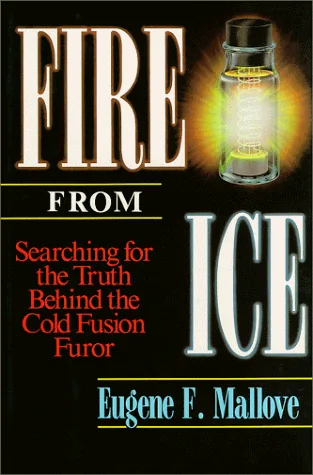
Mallove presents a damning account of institutional suppression against Pons and Fleischmann''s 1989 cold fusion discovery. He alleges that MIT researchers fudged their experimental data, shifting results that initially showed excess heat to appear negative, and that the director of MIT''s hot fusion laboratory planted fraud allegations against Pons and Fleischmann in the Boston Herald. He argues the motivation was protecting $350 million in annual federal hot fusion funding from even a modest $25 million congressional allocation toward cold fusion research.
The discussion expands to zero-point energy, with Mallove confirming that devices by Dr. Paolo and Alexandra Correa appear to generate electric power from the vacuum. He describes the revolutionary implications of cold fusion: zero fuel cost, no deadly radiation, transmutation of radioactive waste within hours rather than millennia, and compact power sources that could transform space exploration.
Key Moments
March 23, 1989 - Pons and Fleischmann announce in Salt Lake City: Mallove sets the origin date: on March 23, 1989, Stanley Pons (head of University of Utah chemistry) and Martin Fleischmann (Royal Society fellow) announced that a heavy-water electrolytic cell with a palladium cathode produced more heat energy than the electricity going in - too much to be chemical, so it must be nuclear.
MIT's three-day shift: positive heat data went away: Mallove, then chief science writer at MIT, says he has documents showing that on July 10, 1989 the MIT heat-measuring experiment's draft report showed excess heat in the Pons-Fleischmann-type cell and zero in the ordinary water control. Three days later the draft was modified and the heat had disappeared. Dr. Mitchell Swartz subsequently found the shifting was even more egregious.
Plasma fusion center director planted the F-word against Pons: Mallove recounts being called at midnight by the director of MIT's plasma fusion center, who claimed CBS News and the Boston Herald were misquoting him as accusing Pons and Fleischmann of fraud and schlock science. Mallove issued a retraction over the wires - only later learning the reporter had an audio tape proving the director had in fact used those exact words to plant the story.
Motorola tested a Patterson cell with the input power switched off: Mallove describes Motorola's test of a Patterson cold-fusion cell: water entered at 60°C and exited at 75°C with about 20 watts of excess heat. When engineers cut the input electricity entirely, the same temperature differential continued for 11 hours straight - published in Infinite Energy magazine - proving the cell wasn't just a hot rock cooling off.
Helium-3 and helium-4 from hydrogen - Arata, China Lake, Miley: Mallove names specific labs that have detected nuclear-change products in cold-fusion cells: the Naval Surface Weapons Center at China Lake, Professor Arata in Japan (a former hot-fusion researcher) finding helium-4 plus the rare helium-3, Professor Dash in Oregon, Dr. Mizuno in Japan, and Dr. George Miley of nuclear engineering at the University of Illinois examining transmutation in the metal coatings of Patterson cells.
Preserved source
From the original ArtBell.com archive
The 2003 commemorative archive preserves the contemporary listing for this broadcast. Links and descriptions reflect the original site and may be outdated.
View the original program listingBooks by This Guest
Selected titles from the guest bibliography. Use them as context for this appearance, not required listening.
Continue exploring
Paths out of this episode
A stronger next move anchored to this specific broadcast.