Tart explains that the mind operates as a virtual reality generator, constructing experience from sensory input during waking hours and creating dream worlds during sleep. He describes experiments showing that psychological expectation shapes altered states of consciousness more powerfully than sensory deprivation itself. Art shares his experience with a software program called Shape Changer that demonstrates psychokinesis, reporting scores of 70 to 90 percent when concentrating versus 15 to 20 when absent.
The discussion turns to survival after death, with Tart citing cases where deceased individuals communicated information no living person could have known. He argues that the mind is fundamentally different from the brain, noting that telepathy shows no inverse square law degradation with distance and may even be amplified inside electrically grounded Faraday cages.
Key Moments
The Big Five psi phenomena, proven beyond reasonable doubt: Tart names the five parapsychological phenomena he says a hundred years of research have proven: telepathy, clairvoyance, precognition, psychokinesis, and healing.
Andrija Puharich's grounded Faraday cage as a telepathic amplifier: Tart recounts working as a college sophomore for physician Andrija Puharich, who found that psychics inside an electrically grounded Faraday cage scored better at telepathy, while a floating cage knocked the effect out - Tart says he replicated this in his own lab.
Dr. Sheeb's sensory deprivation experiment: set and setting matter more than the stimulus: Tart describes a study in which subjects in a windowless room with the lights on were greeted by a graduate student in casual clothes (most got bored) versus a 'Dr. Sheeb' in a lab coat with hypodermic syringes labeled 'emergency tray' and a three-page release form - most of the latter group hit the panic button and reported classic sensory-deprivation symptoms.
Douglas Dean: CEOs who pass a precognition test grow their companies fastest: Tart cites parapsychologist Douglas Dean, who tested chief executives at conventions with a computer-generated precognition task and found the higher scorers ran companies whose net worth had doubled in the previous five years.
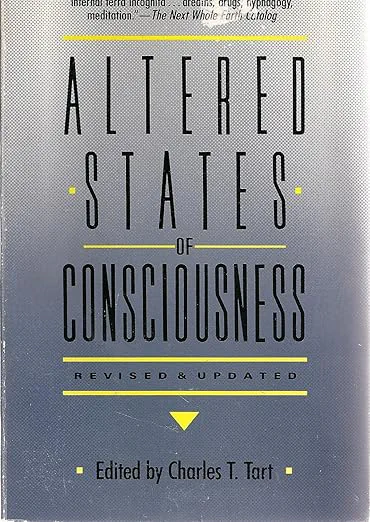
Books by This Guest
Selected titles from the guest bibliography. Use them as context for this appearance, not required listening.