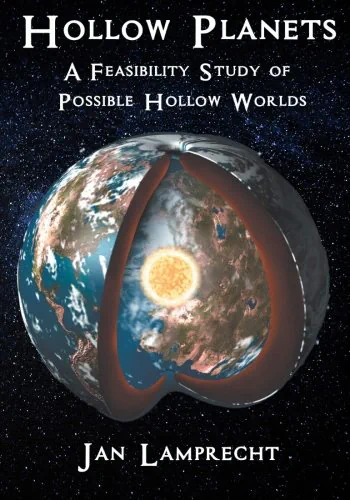
The discussion covers gravity, with Lamprecht citing 18th-century mathematician Leonard Euler's arguments that gravity operates as a pressure rather than an attraction. He points to deep earthquakes occurring at 700 kilometers, far below where conventional theory says rock should flow rather than fracture, as evidence that conditions inside Earth differ dramatically from accepted models.
Lamprecht then turns to Arctic mysteries, describing the accounts of Admiral Peary and Dr. Frederick Cook, who reported seeing mountains and coastlines in areas now absent from modern maps. He discusses his plans for an Arctic expedition to investigate whether cartographic records have been deliberately altered, and whether the fog-shrouded landmass once called Crockerland still exists.
Key Moments
The Apollo 12 'ringing like a bell' moon: Lamprecht describes how the book Our Mysterious Spaceship Moon pulled him back to the hollow-planets idea via the Apollo 12 seismic experiment - when NASA crashed part of the LM into the Moon and scientists reported it 'rang like a bell,' with one American scientist saying it was almost as if the Moon were a hollow titanium ball.
We know more about Pluto than 20 miles down: Lamprecht's epistemological core: humans have never extracted a grain of sand from below ~20 miles down, the Russians' Kola Superdeep Borehole being the deepest in history, so almost everything claimed about the deep Earth is extrapolation from seismology. He says we literally know more about Pluto's surface than what lies 20 miles beneath us.
The seismic shadow zone explained by a hollow Earth: Lamprecht points to the seismic 'shadow zone' - a band on the Earth's surface where earthquake waves arrive weakened - and argues mainstream models force-fit it with a liquid core, while a layered density profile around a hollow interior reproduces the same shadow band when the parameters are tuned correctly.
What if UFOs come from inside the Earth?: Lamprecht reveals what drew him to the topic: he wondered if UFOs, paranormal phenomena, and government secrecy might share a common source not in space but underground. If the truth were 'so freaky' - that craft come from inside the Earth - that alone would explain why governments cover it up.
Crockerland, Bradleyland, and Dr. Frederick Cook: Lamprecht recounts the case for a missing Arctic continent: Admiral Peary sighting 'Crockerland' from a 2,000-foot Cape Colgate hill, Dr. Frederick Cook photographing 'Bradleyland' on his polar journey, and US Geodetic surveyor Dr. Harris in 1904 inferring a continent north of Alaska from anomalous tide flows. Cook was branded a fraud and jailed; Lamprecht says newer research has reversed nearly every charge against him.
Preserved source
From the original ArtBell.com archive
The 2003 commemorative archive preserves the contemporary listing for this broadcast. Links and descriptions reflect the original site and may be outdated.
View the original program listingBooks by This Guest
Selected titles from the guest bibliography. Use them as context for this appearance, not required listening.