
The conversation shifts to the possibility that our universe was spawned by a collider experiment in another reality, creating an infinite chain of universes giving birth to universes. Art and Seife explore whether human consciousness could someday be uploaded to silicon, with Seife explaining that quantum properties of the brain may prevent perfect copying due to the observer effect. He introduces quantum teleportation as a method that transfers quantum information perfectly but destroys the original in the process.
The final hours tackle genetics, with Seife revealing that ancient retroviruses called HERVs hijacked human DNA long ago and still force our cells to produce their proteins. He and Art discuss the implications of discovering genes linked to sexual preference, the ethics of genetic modification, and his conviction that information, like energy, can never truly be destroyed.
Key Moments
Are we someone else's heavy-ion experiment?: Seife entertains Art's question of whether colliders like Brookhaven's RHIC are spawning baby universes - and whether our universe is itself the byproduct of someone else's collider in another civilization, with life-bearing universes copying the fine-tuned constants ad infinitum.
Replacing brain cells with silicon, one by one: Seife describes Hans Moravec's thought experiment of swapping each neuron for a silicon equivalent - the person never notices and ends up with a fully digital brain. He then explains why a perfect classical clone may fail: any quantum element of mind cannot be copied without destroying the original (no-cloning theorem).
Information from your body survives your death: Information cannot be destroyed; even erasing a hard-drive bit dissipates that bit as heat into the universe. Seife agrees that everything inanimate - coffee tables, beds, windows - is processing information at a low level, so 'if this bed could talk' may be literally true.
Quantum suicide and the lone survivor: Seife explains Max Tegmark's 'quantum suicide' thought experiment: a quantum revolver that fires 50 percent of the time, pulled repeatedly. In the multiverse the conscious shooter only ever experiences universes where it didn't fire - convincing himself many-worlds is true, but unable to prove it because in most universes he is dead on the floor.
Could multiple personalities be parallel-universe leakage?: A listener asks whether multiple personality disorder and what cats appear to see could be glimpses of parallel universes. Seife notes serious researchers including Roger Penrose have proposed a quantum nature to consciousness, though he is personally skeptical.
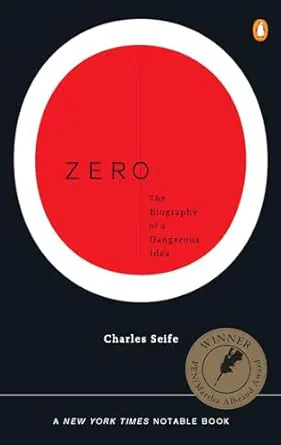
Books by This Guest
Selected titles from the guest bibliography. Use them as context for this appearance, not required listening.
Collection
More in this collection
Continue exploring
Paths out of this episode
Stronger next moves anchored to this specific broadcast.