January 20, 2007: Parallel Universes and Quantum Science - Charles Seife
The conversation takes a deep look at quantum entanglement, the phenomenon Einstein called "spooky action at a distance," where paired particles respond to each other instantaneously regardless of the distance between them. Seife explains why, despite this apparent faster-than-light connection, scientists have proven it impossible to send actual messages through entangled particles. He and Art discuss how information theory connects to Einstein's relativity and quantum mechanics, providing a unifying framework for understanding the cosmos.
Art presses Seife on parallel universes, the origins of the Big Bang, and the possibility that our universe was created by a particle collider in another reality. Seife acknowledges that an intelligent designer cannot be ruled out by science and shares how physicist David Deutsch theorizes that quantum computers may one day tap computational resources from parallel universes.
Key Moments
Information is a physical property of everything: Seife frames information not as bits on a hard drive but as a physical property of matter and energy on par with mass - the third great revolution of 20th-century physics, after relativity and quantum mechanics, traceable to Claude Shannon in the 1940s.
Information is indestructible (except in black holes): Seife explains that information stored on an atom can never be wiped out - the basis of Stephen Hawking's famous black-hole information paradox bet - and that with the right instruments enough light streaming outward could in principle let an observer 2,000 light-years away watch Caesar's assassination.
Parallel universes resolve Schrodinger's cat: Seife pictures our universe as a cellophane sheet pressed against infinite others, infinitely close. Schrodinger's cat and a particle going through both slits at once stop being weird the moment you accept superposition is the same particle in two adjacent universes.
Quantum computers reach into other universes: David Deutsch's view: a quantum computer outpaces a classical one by parallel processing across many universes. DARPA funds the research because whoever builds a working quantum computer can crack every public-key code protecting credit cards and state secrets.
Art Bell on death as a slice of sleep: Asked about fear of death, Art tells a listener he is not afraid to die even if death is total nothingness, comparing it to going to sleep at night, though he admits he is concerned about a painful death.
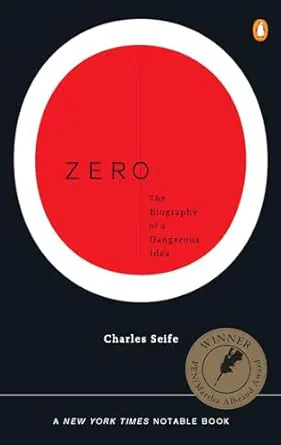
Books by This Guest
Selected titles from the guest bibliography. Use them as context for this appearance, not required listening.
Collection
More in this collection
Continue exploring
Paths out of this episode
Stronger next moves anchored to this specific broadcast.