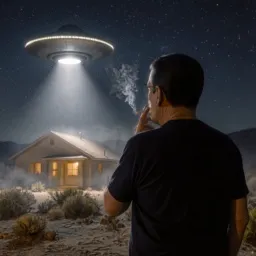
The conversation turns to privacy concerns as billions of devices connect to the Internet. Dr. Kaku notes that the Internet was originally built by physicists for the Pentagon to survive nuclear war, deliberately designed without censorship or gatekeeping. He warns that Little Brother, the nosy neighbor, may pose a greater surveillance threat than Big Brother.
Art and Dr. Kaku also explore the future of wealth itself, arguing that intellectual capital is replacing natural resources as the foundation of prosperity. They discuss how Silicon Valley could become a rust belt by 2020 as molecular and DNA computing replace silicon, and how nations that fail to embrace the Internet risk being left behind economically.
Key Moments
Penny chips and stage-three computing: Kaku predicts that by 2020, computer chips will cost a penny and be embedded in clothes, glasses, and walls, with intelligent toilets monitoring health and clothing calling ambulances after accidents.
Silicon hits the molecular wall: Kaku argues silicon-based Moore's Law will stall around 2015 as etching reaches molecular scale, forcing a transition to DNA, protein, and quantum computers, and warns whichever nation leads that shift inherits the next computing era.
Genome on a credit card: Kaku says the human genome will be substantially sequenced within a year or two, and predicts that by 2020 every person will carry a card with their full genetic code, foreshadowing diseases like diabetes, heart disease, and cancer.
Rogue black holes drifting near Earth: Kaku breaks down the American Astronomical Society's January 2000 announcement of an isolated wandering black hole detected by Hubble, explaining how its gravitational lensing was measured and what would happen if one drifted near our solar system.
Where God divides by zero: Responding to a listener's line, Kaku unpacks Roy Kerr's 1963 result: spinning black holes don't collapse to a point but to a ring, and falling through that ring could in principle open an Einstein-Rosen wormhole to another universe.
Preserved source
From the original ArtBell.com archive
The 2003 commemorative archive preserves the contemporary listing for this broadcast. Links and descriptions reflect the original site and may be outdated.
View the original program listingBooks by This Guest
Selected titles from the guest bibliography. Use them as context for this appearance, not required listening.
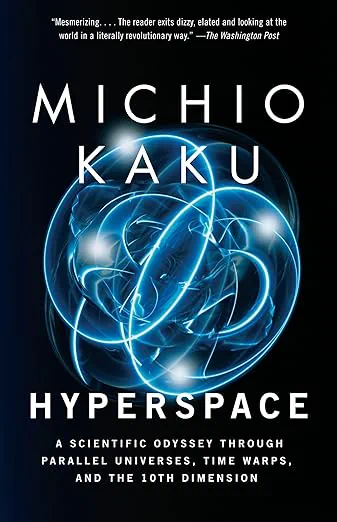
Hyperspace: A Scientific Odyssey Through Parallel Universes, Time Warps, and the 10th Dimension
1994
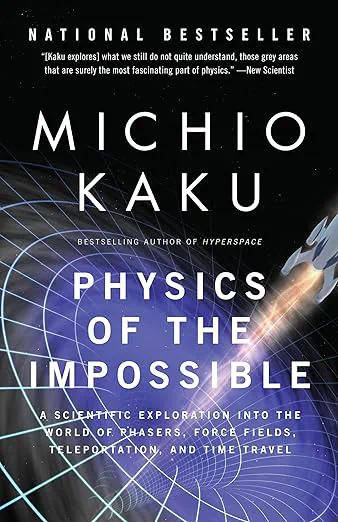
Continue exploring
Paths out of this episode
A stronger next move anchored to this specific broadcast.