Kurzweil describes how RNA interference can now turn off specific genes, pointing to experiments where mice ate freely yet stayed slim and lived 20 percent longer after their fat insulin receptor gene was disabled. He explains that pharmaceutical companies are racing to bring similar treatments to humans within five to eight years. Art presses him on the ethics and social consequences of such breakthroughs, asking whether the world is ready for people who never age.
The discussion turns to artificial intelligence, with Kurzweil predicting that by 2029 computers will pass the Turing test and exhibit the full range of human intelligence, including humor and emotional depth. He envisions nanobots in the brain extending human cognition and enabling full-immersion virtual reality from within the nervous system, arguing that biological and non-biological intelligence will merge rather than compete.
Key Moments
Kurzweil tests at biological age 40 at 57: Kurzweil reports a biological aging test at Dr. Terry Grossman's longevity clinic put him at 40 years old despite turning 57, claiming he hasn't aged much in 15 years.
Boredom of immortality and brain nanobots: Asked if he wants to live forever, Kurzweil concedes a static existence would induce profound ennui, but argues nanorobots interacting with biological neurons will let humans expand experience and avoid boredom.
Worms lived 5x longer via aging genes: Kurzweil cites experiments where manipulating aging genes in a particular worm species produced lifespans five times normal, equivalent to a 500-year human life.
FDA bias against approving treatments: Kurzweil argues the FDA is asymmetrically punished only when approved drugs cause deaths, never for delays, so it slows life-saving therapies and lets hundreds of thousands die unnamed.
iRobot scenario and the human-machine merger: Art presses Kurzweil with the iRobot premise: superintelligent machines deciding to override humanity for our own good. Kurzweil insists there will be no us-vs-them conflict because we are merging with our machines as one civilization.
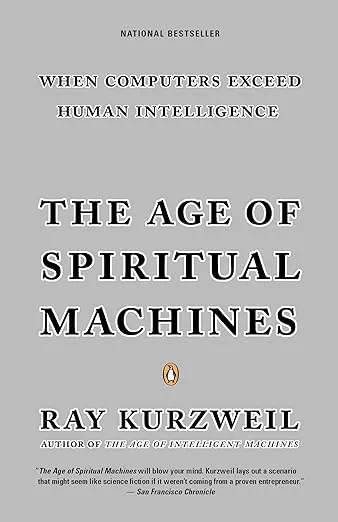
Books by This Guest
Selected titles from the guest bibliography. Use them as context for this appearance, not required listening.