February 8, 2001: Mayan Calendar - Ian Xel Lungold | Afterlife Consciousness - Dr. Gary Schwartz
In the second half, Art speaks with Dr. Gary Schwartz, a professor of psychology, medicine, and neurology at the University of Arizona. Dr. Schwartz introduces his systemic memory hypothesis, which proposes that all dynamic systems engaged in feedback loops store information and energy indefinitely. He traces the logic from atoms and molecules up through organs, organisms, and beyond, suggesting that consciousness itself arises from and is sustained by these recursive feedback processes.
Dr. Schwartz describes laboratory experiments conducted with medium Laurie Campbell, whose ability to relay specific personal details from deceased individuals produced results he calls jaw-dropping. He discusses the implications for survival of consciousness after death and previews future technologies that could enable direct communication with the other side.
Key Moments
Nine cycles, each 20x shorter: Lungold lays out the core Mayan calendar thesis: nine nested levels, each twenty times shorter than the last, producing the 'quickening' of creation.
Galactic and universal cycles arrive: Lungold pinpoints the start of the galactic cycle to January 5, 1999, lasting only 12.8 years, with a final 260-day universal cycle to follow.
The fifth night and November 2007: Lungold predicts a 'fifth night' disruption beginning November 18, 2007, drawing parallels to past fifth nights including Rome's collapse and World War II.
Schwartz: light, image, and information never die: Dr. Gary Schwartz describes a Vancouver penthouse epiphany: realizing his image radiates outward indefinitely, seeding the 'living energy universe' theory that information persists forever.
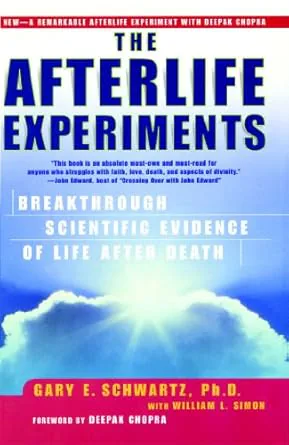
Books by These Guests
Selected titles from the guest bibliography. Use them as context for this appearance, not required listening.
Continue exploring
Paths out of this episode
A stronger next move anchored to this specific broadcast.