The discussion turns personal as Eric shares his close friendship with Jimi Hendrix, recounting the guitarist's final days. He describes watching Hendrix deteriorate, recognizing danger when he first saw Hendrix without his guitar in public. Eric reveals that Hendrix was kidnapped at gunpoint and discusses the FBI's heavy surveillance of musicians during the Vietnam era. He reconsiders his earlier theory that Hendrix's death was a suicide, suggesting his extensive research for a new book points toward a different conclusion.
Eric reflects on the British Invasion, the influence of Elvis Presley on an entire generation, and how LSD opened creative doors while also exacting a heavy toll. He speaks candidly about John Lennon's transformation through Yoko Ono, the threat Charlie Manson's crimes posed to the Beatles reuniting, and what he calls the healing magic of live music, the spiritual energy that fills the space between performer and audience.
Key Moments
Art on We Gotta Get Out of This Place as a service anthem: Art opens by describing how, stationed in Okinawa, the Philippines, and Vietnam during his Air Force years, songs like 'We Gotta Get Out of This Place' and 'House of the Rising Sun' functioned as virtual national anthems for U.S. servicemen - and that he can't even tell the listener how important they were at the time.
How well anyone could really know Jimi Hendrix: Asked whether Hendrix was a good friend, Burdon hesitates: he doubts anyone could really get close to Jimi - a loner whose order of priority was LSD, girls, performance, and nothing else. He says he never saw Hendrix without a guitar in the first few years he knew him.
Hendrix knocking on Burdon's door wanting only music: Burdon describes the inner Hendrix he knew: the showman would come to Burdon's London apartment, knock on the door, and say 'I've had enough of that stuff, man - let's just kick back and listen to some music' on Burdon's high-end stereo.
Burdon on Vietnam: it wasn't the troops who should have been on trial: Coming from a half-military family, Burdon says he had sympathy for the soldiers - it wasn't their fault. The people who should have stood trial for the Vietnam travesty, in his view, were the generals, the colonels, the war planners, the intelligence services, and maybe even the president; the troops served on blind faith.
Singing House of the Rising Sun in the actual house, for nuns and judges: Burdon recounts being invited to dinner at what he believes is the original House of the Rising Sun on St. Louis Street in New Orleans - restored by a prominent local attorney - and finding himself asked to sing the song in the main parlor before a gathering of about 40 Catholic nuns, two high-ranking police officers, and a couple of high-court judges.
Preserved source
From the original ArtBell.com archive
The 2003 commemorative archive preserves the contemporary listing for this broadcast. Links and descriptions reflect the original site and may be outdated.
View the original program listingBooks by This Guest
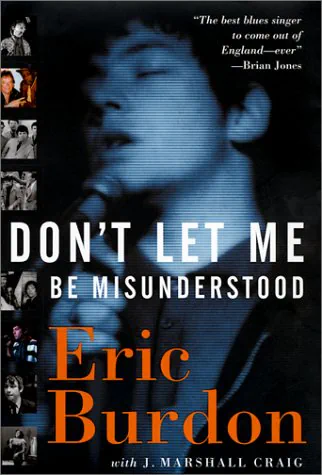
Selected titles from the guest bibliography. Use them as context for this appearance, not required listening.