The conversation turns to the science behind NDEs. Dr. Morse explains that fighter pilots in centrifuges regain consciousness at the exact moment blood stops flowing to their brains, mirroring the experiences children describe. He presents three key findings: people die fully conscious and aware, roughly 20 percent of the brain appears hardwired for this experience, and theoretical physicists describe a timeless, spaceless reality consistent with what dying patients report.
Art presses Dr. Morse on life after death, reincarnation, and the nature of memory. Dr. Morse offers a striking position: NDEs teach us about living, not necessarily about what follows death. He argues that memories may be stored outside the brain entirely, citing cases of patients functioning normally after losing half their brain tissue. The discussion also covers how NDEs boost immune function and could save billions in unnecessary end-of-life medical spending.
Key Moments
Resuscitated patients hear what's happening: Morse explains that across 15 years at Seattle Children's Hospital only 26 children met his strict clinical-death criteria, and that even profoundly comatose or just-died patients can still hear and absorb conversation around them.
Pocatello girl underwater 19 minutes: Morse recounts the case that started his research: a young girl pulled from a community pool after 19 documented minutes underwater, fixed and dilated pupils, who later recognized him in clinic and described seeing him put a tube in her nose.
MRI fields and the 'God spot': Art Bell ties his recent MRI-tech caller's reports to Morse's right-temporal-lobe 'God spot' theory; Morse agrees NDErs often short out watches and credit cards and develop paranormal abilities afterward.
Sarah's hellish NDE and cross-cultural imagery: Morse argues NDE imagery is shaped by personal psychology and culture, citing churchgoer Sarah's hell experience after a bicycle crash, plus 400 Japanese and 50 African NDEs that contained no Christian heaven or hell.
Memory may be stored outside the brain: Morse argues memories aren't physically stored in the brain - citing Lashley's failed memory-trace search, hemispherectomy patients who function normally, and the heart-lung transplant recipient who dreamed her donor's name.
Preserved source
From the original ArtBell.com archive
The 2003 commemorative archive preserves the contemporary listing for this broadcast. Links and descriptions reflect the original site and may be outdated.
View the original program listingImages and material referenced by the original site
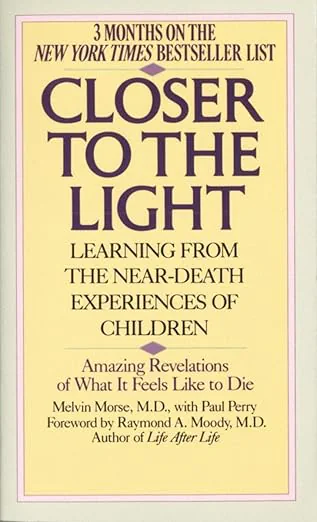
Books by This Guest
Selected titles from the guest bibliography. Use them as context for this appearance, not required listening.
Collection
More in this collection
Continue exploring
Paths out of this episode
A stronger next move anchored to this specific broadcast.