Crowe evaluates prominent Bigfoot evidence with a skeptical eye. He considers the 1967 Patterson film credible due to the female creature's visible breasts, which he argues supports his theory that Bigfoot is a relic Homo erectus rather than an ape. He dismisses the Cliff Crook photograph as a likely model and expresses doubts about a widely televised video. Crowe estimates that roughly one Bigfoot exists for every 100 bears, placing thousands across North America.
Art Bell plays a recording of an alleged Bigfoot vocalization obtained by Linda Moulton Howe, which Crowe considers authentic based on similar recordings from Oregon and Northern California.
Key Moments
Crowe's 1991 introduction: tracks and a long hair: Crowe describes being taken by camo-clad Bigfoot enthusiasts to Yale Reservoir, Washington in summer 1991. Within fifteen minutes alone he found a set of tracks; later, on a deer game trail, he found broken trees at non-human heights and a long hair on one of them - which he kept, ending the friendship.
Krantz says shoot the first one, hang the second shooter: Crowe summarizes Washington State anthropologist Grover Krantz's published position: for the sake of science, the first Bigfoot anyone finds should be shot and dissected - but the second shooter ought to be hung.
Three-knock communication that gets answered: Crowe relates Datis Perry's tip from Carson, Washington: rap a stick on a tree in patterns - three raps, pause, two raps - and you'll get an answer. Crowe wandered the woods feeling foolish all day, then suddenly received a reply, an experience corroborated by a Bay Area research group.
Skamania County mock trial of a Bigfoot killer: Crowe describes a mock trial his society staged at the Bigfoot campground in Carson, Washington in August 1995, testing the Skamania County law that makes killing a Bigfoot a misdemeanor if proved an ape, but murder if proved human. A bagpiper led in a member in a gorilla suit; three judges, two PhD DNA experts, and a prosecutor flown in from Los Angeles produced a hung jury.
Krantz's population estimate: thousands nationwide: Crowe relays Grover Krantz's calibrated guess based on gorilla population studies: roughly one Bigfoot for every 100 bears, which works out to thousands across the United States - with Florida, Pennsylvania, Oregon, Washington, and California producing the most reports.
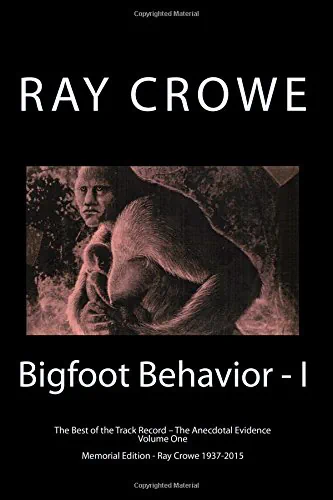
Books by This Guest
Selected titles from the guest bibliography. Use them as context for this appearance, not required listening.