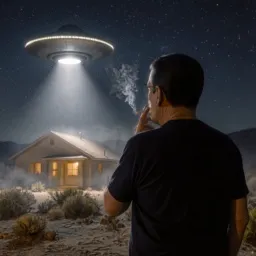
February 10, 2007: Physics and Sci-Fi Science - Jennifer Ouellette
The discussion moves through the multiverse theory, wormholes as depicted in the film "Contact," and physicist Michio Kaku's civilization scale, with Art pressing the sobering point that the odds of humanity surviving the transition from Type Zero to Type One are almost zero. Ouellette shares her perspective on why women remain underrepresented in the hard sciences and discusses the physics behind fictional universes, arguing that even fantasy worlds must follow internal rules. She also addresses telepathy, suggesting that while no magical mechanism exists, future technology involving brain implants could one day achieve something resembling it.
The conversation turns philosophical as they discuss the Big Bang, the accelerating expansion of the universe, the closure of Princeton's ESP lab, and whether science leaves room for the existence of God.
Key Moments
Why matter beat antimatter: Ouellette explains the deep mystery of the early universe: matter-antimatter pairs should have annihilated equally, but a tiny asymmetry left a sliver of matter that became everything we see.
Agnostic raised by evangelicals: Ouellette describes growing up evangelical Christian, knowing the Bible deeply, and eventually concluding she's agnostic - distinguishing respect for faith from confusing it with science.
Death as dreamless sleep: Bell offers a comforting frame - death may be like dreamless sleep - and Ouellette responds that the truly frightening thing is non-existence, which is impossible to conceive because our universe is, to us, ourselves.
Consciousness might continue at death: Asked whether consciousness - a phenomenon science doesn't fully understand - might persist after physical death, Ouellette concedes it is possible, given conservation principles.
Books by This Guest
Selected titles from the guest bibliography. Use them as context for this appearance, not required listening.
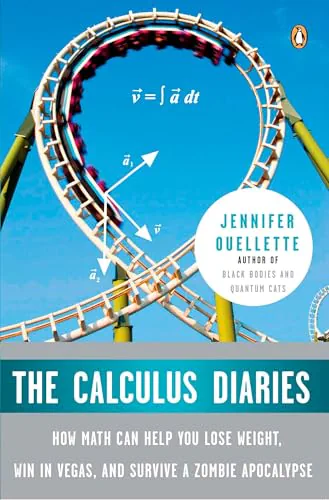
The Calculus Diaries: How Math Can Help You Lose Weight, Win in Vegas, and Survive a Zombie Apocalypse
2010