0:00 / 0:00
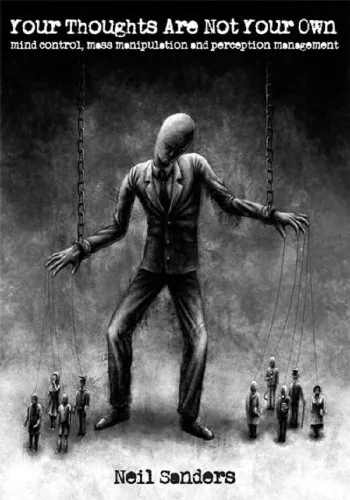
Art Bell welcomes Neil Sanders, a British mind control researcher and author of Your Thoughts Are Not Your Own, for an expansive discussion on modern psychological manipulation. The conversation opens with Sanders describing his background as a qualified hypnotherapist and past life regressionist before turning to the night's central theme.
Art frames the discussion around ISIS recruitment as a present-day example of mind control, questioning how violent propaganda distributed over the internet can transform ordinary people into radicalized killers. Sanders draws parallels between terrorist recruitment tactics and corporate advertising, explaining how cults and brands alike exploit feelings of inadequacy and the desire to belong. He outlines historical programs like MKUltra, Operation Chatter, and the Phoenix Program, detailing the use of truth serums, trauma-based conditioning, and psychological warfare on civilian populations.
The conversation broadens into media manipulation, including the CIA's liaison office with Hollywood, embedded journalists at CNN, and the Tavistock Institute's role in shaping public perception through engineered fear. Sanders and Art debate Western foreign policy, Syrian regime change efforts, and how propaganda selectively paints world leaders as villains to serve economic interests.
Art frames the discussion around ISIS recruitment as a present-day example of mind control, questioning how violent propaganda distributed over the internet can transform ordinary people into radicalized killers. Sanders draws parallels between terrorist recruitment tactics and corporate advertising, explaining how cults and brands alike exploit feelings of inadequacy and the desire to belong. He outlines historical programs like MKUltra, Operation Chatter, and the Phoenix Program, detailing the use of truth serums, trauma-based conditioning, and psychological warfare on civilian populations.
The conversation broadens into media manipulation, including the CIA's liaison office with Hollywood, embedded journalists at CNN, and the Tavistock Institute's role in shaping public perception through engineered fear. Sanders and Art debate Western foreign policy, Syrian regime change efforts, and how propaganda selectively paints world leaders as villains to serve economic interests.
Key Moments
ISIS as remote mind control: Art frames ISIS internet radicalization as the clearest modern example of mind control.
Operation Chatter: Sanders describes Operation Chatter and early drug-based interrogation research after World War II.
ISIS propaganda as advertising: Sanders links ISIS's constant propaganda to the same psychological field as advertising.
Phoenix Program enters the discussion: The conversation turns to historic programs like Phoenix while Art compares them to ISIS radicalization.
MKOften, Kubark, and cults: Sanders connects MKUltra offshoots, Scientology-like auditing, and the CIA's Kubark document.
Books by This Guest
Selected titles from the guest bibliography. Use them as context for this appearance, not required listening.