
Alper expresses frustration that recent publications, including a Time magazine cover story on the so-called God Gene, have restated his theories without crediting his prior work. He describes a specific scientist who rewrote his book's arguments as original research, changing only minor terminology to avoid plagiarism claims. Art confirms that Alper first presented these ideas on the program years earlier, well before the mainstream scientific community embraced them.
The discussion also covers new research on the neuroscience of love, including the role of oxytocin in bonding during breastfeeding and intimacy. Art opens the show with news about chimera experiments blending human and animal cells, a proposed bill criminalizing commercial-skipping on DVRs, and a caller who produces subliminal sleep audio revealing that at least one percent of media content contains hidden messages.
Key Moments
Humans are hardwired to believe: Alper lays out the central thesis: every culture in history, even isolated rainforest tribes, has believed in some form of spiritual reality, prayed to deities and ritualized burial, suggesting a hardwired brain region for spirituality.
Self-awareness, mortality and the cognitive workaround: Alper argues the same self-conscious awareness that made humans dominant also created the perpetual mortal crisis, and natural selection answered it by selecting a cognitive modification that compels belief in something else out there.
Alper outs himself as an atheist: Pressed by Art, Alper says the neurophysiological evidence has moved him from agnostic to atheist: no god, no spirits, no soul, no ghost in the machine, when the brain ceases so does consciousness.
Why are there atheists? The bell curve answer: Answering listener Elizabeth's question about how he himself can be an exception, Alper explains spirituality falls on a genetic bell curve like height or musicality, with zealots on one extreme and the spiritually tone-deaf on the other.
What if God turned up on his couch?: Art asks the hardcore atheist what he'd do if his couch suddenly glowed and identified itself as God; Alper jokes he'd check himself in for thorazine, then walks it back to say a real experience would not be dismissable.
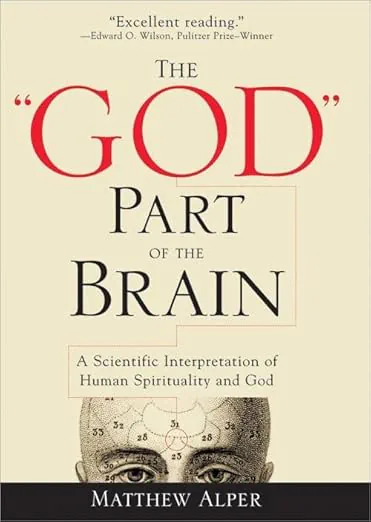
Books by This Guest
Selected titles from the guest bibliography. Use them as context for this appearance, not required listening.
Continue exploring
Paths out of this episode
A stronger next move anchored to this specific broadcast.