Schwartz recounts how his co-researcher Linda Russek inspired him to apply the theory to mediumship experiments after the passing of her father, a distinguished cardiologist. Early studies recorded high-frequency sound anomalies during attempted communication sessions, while a later clock experiment with Linda's mother produced statistically significant results suggesting an unseen intelligence was influencing the device on command.
The conversation turns to a picture-matching experiment using two mediums who did not know each other. Medium two, working in a trance state, attempted to receive images from four deceased individuals and achieved a 100 percent accuracy rate when researchers used the information she provided. Art also reveals a Sprint outage report found on a government website listing Area 51 among the affected locations, a discovery that dominates the first hour of the broadcast.
Key Moments
Universal living memory hypothesis: Schwartz lays out his Yale-era theory that all systems, from atoms to galaxies, store information and energy and have a kind of memory and immortality.
Fish-pump bird sound during grandmother session: While Linda viewed her deceased bird-loving grandmother's photo, an aquarium pump began screeching like a bird in a tank running quietly for years, an anomaly Schwartz reports as an early eerie data point.
Elaine Rusek's two-clock experiment: Schwartz describes a published ABAB experiment where Linda's mother asked her deceased husband to speed up or slow down a broken digital clock on alternating nights, yielding a statistically significant ninety-minute difference.
Medium-to-medium picture transfer experiment: Schwartz outlines a controlled study where one medium drew pictures supposedly suggested by four deceased people, then a second blinded medium attempted to receive those same images on video, with experimenters guessing too as controls.
Preserved source
From the original ArtBell.com archive
The 2003 commemorative archive preserves the contemporary listing for this broadcast. Links and descriptions reflect the original site and may be outdated.
View the original program listingBooks by This Guest
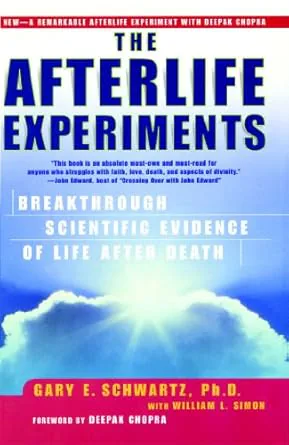
Selected titles from the guest bibliography. Use them as context for this appearance, not required listening.
Continue exploring
Paths out of this episode
A stronger next move anchored to this specific broadcast.