
Mitnick addresses several myths surrounding his case, including the false New York Times report that he broke into NORAD and a prosecutor's claim that he could launch nuclear missiles by whistling into a telephone. Despite these exaggerations, a federal judge held him in solitary confinement for eight months and he ultimately served four and a half years as a pretrial detainee. The government attributed $300 million in damages by simply tallying the research and development costs of source code he accessed.
The conversation turns to broader security concerns, including a phone company back door system called SAS that allowed remote wiretapping without court orders, and the FBI's Magic Lantern program, a government-developed Trojan horse capable of logging every keystroke on a target's computer.
Key Moments
Mitnick denies the NORAD break-in myth: Mitnick directly refutes the front-page New York Times claim by John Markoff that he broke into NORAD, calling the story essentially false and tracing it to confusion with the movie War Games. He says he never tried, and notes such systems shouldn't be on public networks anyway.
The whistle-into-a-phone nuclear missile claim: Mitnick recounts a federal magistrate hearing where the prosecutor argued he should have phone restrictions because he could whistle into a telephone and launch nuclear missiles - and the judge accepted it, finding that armed with a keyboard he was a danger to national security.
Things Mitnick won't say because jail would be pleasant: Asked what he found that he hasn't disclosed, Mitnick says he is fearful that revealing certain things would mean 'jail might be a pleasant experience compared to what could happen.' He references a dark side, not the elected government but underhanded factions, and notes he is still under federal supervised release.
Mitnick's definition of a hacker: Mitnick defines hacker as not a person but a skill set and out-of-the-box way of thinking, traced to 1960s MIT computer enthusiasts. He likens it to lock picking - learning how something works and how to defeat it for fun and intellectual challenge, not malicious purpose or profit.
Free Kevin defacements harmed his case: Mitnick discusses the Free Kevin movement that defaced the New York Times, UNICEF, and Yahoo homepages while he was incarcerated. He says he never condoned it, asked his attorney to publicly tell people to stop, because the defacements actually harmed his case and gave the media fuel to portray hackers as malicious.
Preserved source
From the original ArtBell.com archive
The 2003 commemorative archive preserves the contemporary listing for this broadcast. Links and descriptions reflect the original site and may be outdated.
View the original program listingBooks by This Guest
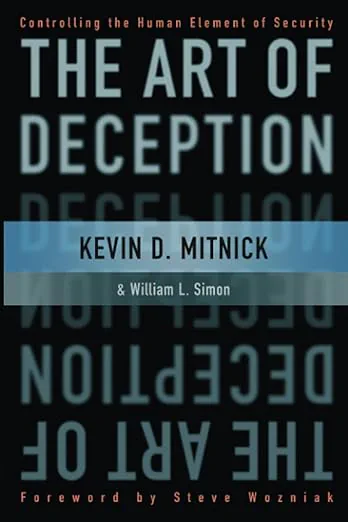
Selected titles from the guest bibliography. Use them as context for this appearance, not required listening.
Continue exploring
Paths out of this episode
A stronger next move anchored to this specific broadcast.