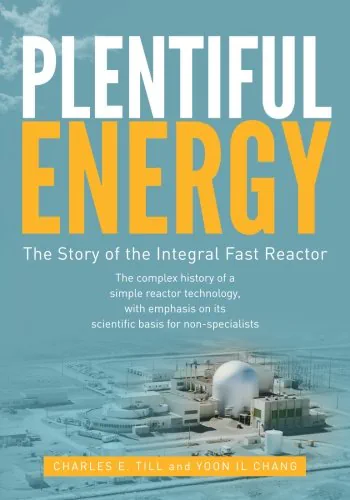
Till describes how the IFR demonstrated inherent safety by surviving the exact same accident that destroyed Chernobyl. When coolant pumps were deliberately shut off with no human intervention or control rod insertion, the reactor simply powered itself down. The same test was repeated for a Three Mile Island scenario that afternoon with identical safe results. Despite these achievements, the Clinton administration abruptly canceled the program in 1994, and the facilities and expertise have since been scattered.
The show opens with Ann Strieber describing her near-death experience following a brain aneurysm rupture, during which she encountered her deceased cat Coe in the world of the dead rather than her late mother. She recalls hearing a voice offering her the choice to continue on or return, and credits Coe with guiding her back. Art and Ann discuss whether animals possess souls, the power of prayer in healing, and the series of coincidences that saved her life.
Key Moments
What worried the early nuclear physicists: Asked whether early reactor designers thought about consequences, Till says the only crisis of conscience was the weapon use, not waste; the assumption was that if the reactor itself was made economic, the spent-fuel and waste problems would come in good time. He calls that a bad misjudgment.
Chernobyl, the sarcophagus and a thousand-year cleanup: Till and Art discuss Chernobyl as the worst possible accident, the unstable concrete sarcophagus, and the fact that without a superhuman cleanup the contaminated zone has to be left in place for thousands of years.
The three things a future reactor must do: Till lays out his criteria for a successful future reactor: efficient fuel use (current reactors burn under 1% of mined uranium), safety that doesn't depend on operators, and a short-lived waste product. He says his Integral Fast Reactor met all three.
Clinton kills the Integral Fast Reactor: Till describes the September 1994 cancellation of the IFR program, announced in Clinton's State of the Union as an unnecessary advanced nuclear program; Republicans took Congress two months later but it was too late, and he has no illusions it will be revived.
No, there is no magic black box: Asked by Art about all the listener emails proposing free-energy devices, perpetual motion and radio-wave radiation reduction, Till says he received hundreds across 20 years at Argonne and the answer is flatly no, none of them work; the laws of physics still apply.
Books by This Guest
Selected titles from the guest bibliography. Use them as context for this appearance, not required listening.