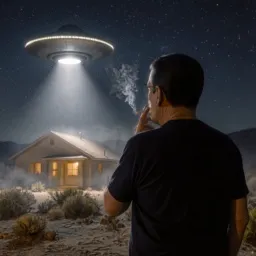
Haisch draws on the work of autistic savants to support his case that the brain functions as a filter of consciousness rather than its source. He cites extraordinary examples including Leslie Lemke playing Tchaikovsky after a single listen and Daniel Tammett reciting pi to over 21,000 decimal places. These abilities, he suggests, point to a universal consciousness that most humans can only access in fragments.
The discussion extends into reincarnation, the zero-point energy field, and the crisis facing modern physics through its overreliance on unverifiable string theory. Art challenges Haisch on the social consequences of abandoning organized religion, while Haisch maintains that a scientifically grounded concept of God could unite humanity without the divisiveness that traditional religions often produce.
Key Moments
93% of National Academy of Sciences members reject God: Asked why most scientists won't admit belief in a creator, Haisch cites the figure that 93% of National Academy of Sciences members reject God, while the Academy itself officially declares the question outside science.
Fine-tuning: trillions of universes vs. one intelligence: Haisch frames his core argument: the universe's properties are 'amazingly just right' for life. Mainstream science explains this with trillions of unseen universes; he argues it's equally rational to posit one intelligence behind it.
Brain as filter, not source, of consciousness: Haisch separates brain from consciousness, arguing the brain is the vehicle through which a universal consciousness 'inherited from and shared with the intelligence behind the universe' interacts with mortal bodies. Art names it: 'In other words, God.'
Huxley's mescaline 'crack in the filter' and the autistic savants: Haisch invokes Aldous Huxley's mescaline experiences and autistic savants like Daniel Tammett (pi to 21,514 places) and Leslie Lemke (Tchaikovsky after one listen) as evidence that consciousness is being filtered through, not generated by, the brain.
Afterlife is built into the theory; sparks of infinite consciousness: Haisch says afterlife isn't a probability but a built-in consequence: if we are sparks of an infinite consciousness, that consciousness can't die. He quotes Teilhard de Chardin: 'we are not human beings having a spiritual experience, but spiritual beings having a human experience.'
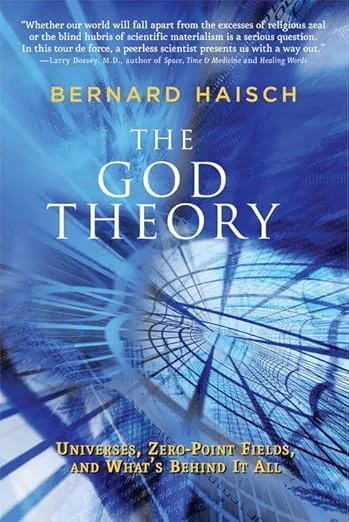
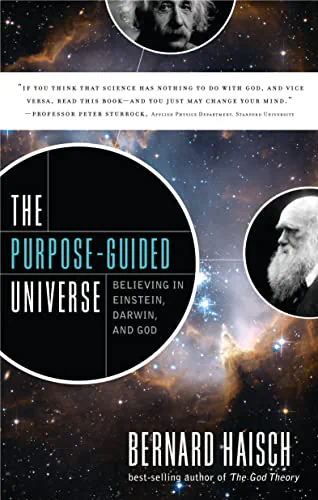
Books by This Guest
Selected titles from the guest bibliography. Use them as context for this appearance, not required listening.
Collection
More in this collection
Continue exploring
Paths out of this episode
A stronger next move anchored to this specific broadcast.