
The conversation shifts to practical strategies for Americans considering life abroad. Pankau describes countries like Belize, Estonia, and Costa Rica as affordable havens where retirees can stretch Social Security checks three times further, earn high interest rates on deposits, and enjoy longer life expectancy than in the United States. He explains how international bank accounts and offshore MasterCard or Visa cards can provide financial privacy without leaving a domestic paper trail.
Art and Pankau also examine the recent Cayman Islands banking scandal, where an informant turned over 1,500 client names to the IRS. Pankau warns against ever entrusting a third party with offshore funds, stressing that the safest approach is to personally open and manage foreign accounts.
Key Moments
Offshore bank plus international MasterCard leaves no US trace: Pankau explains how a single trip to a place like the Isle of Man lets you open an account, link it to an international MasterCard or Visa, and then route every Walmart purchase back to a non-US Cray rather than the IRS-accessible domestic systems.
Most people get caught by ex-spouses, not technology: Pankau argues the government does not have the surveillance technology people imagine and that informants - particularly ex-spouses and ex-partners - turn in more disappeared people than every other method combined, illustrated by a Seattle banker caught via a pin register on his wife's phone.
Pankau's Y2K kit: diesel generator and 10,000 rounds: Asked by a caller what to do for Y2K, Pankau says he is buying a diesel generator and stockpiling at least 10,000 rounds of ammunition, because 'you can't eat gold' and food and electricity will be more valuable than precious metals if things break.
IRS not Y2K compliant - owe them, don't be owed: Pankau notes the IRS is among the agencies not Y2K-ready and quips that going into the rollover you would much rather owe them money than have them owe you, since their records may not survive.
DBT AutoTrack - the real database citizens can't buy: Pankau explains that public records sites and $39.95 'people-search' services are essentially repackaged free data, and that the real investigative database, DBT AutoTrack, restricts itself to attorneys and licensed PIs by policy, citing the Fair Credit Reporting Act.
Books by This Guest
Selected titles from the guest bibliography. Use them as context for this appearance, not required listening.
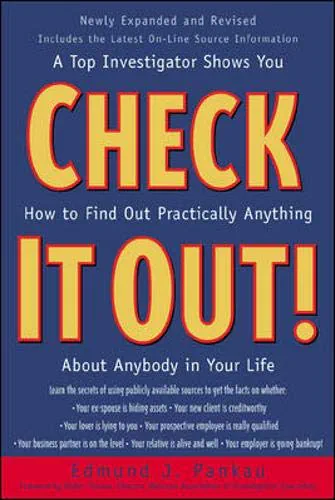
Check It Out!: A Top Investigator Shows You How to Find Out Practically Anything About Anybody
1992
Continue exploring
Paths out of this episode
A stronger next move anchored to this specific broadcast.