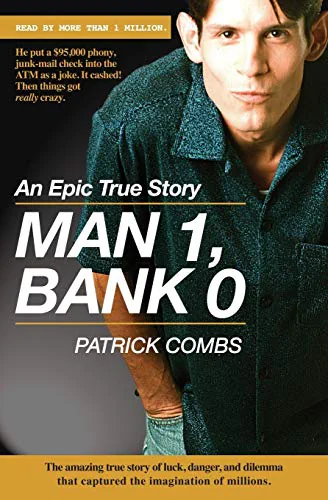
Combs explains that after researching banking law, he discovered three separate legal grounds supporting his claim to the funds. The word non-negotiable has no legal meaning on a check under UCC law. The bank missed its midnight deadline to notify him of the dishonored check by sixteen days. And the issuance of a cashier's check for the exact deposit amount constitutes final payment under court precedent. When the bank responded with threats of fraud charges rather than courtesy, Combs refused to return the money on principle. He reveals the junk mail company unknowingly mailed forty million legally valid checks across the country. Callers passionately debate the ethics of keeping money that was never earned versus holding institutions accountable to their own rules.
A wildly entertaining broadcast that exposes a bizarre loophole in American banking law through one man's accidental experiment.
Key Moments
The unsigned junk-mail check goes into the ATM: Art lays out the setup: Patrick Combs of San Francisco, treating it like Monopoly money, dropped a non-negotiable junk-mail check for $95,093.35 - unsigned, unendorsed - into a deposit envelope at a First Interstate ATM. The teller honored it and posted the full amount to his account.
Cashier's check into the safety deposit box: When Combs called the bank and was told repeatedly the money was legally his, he withdrew it as a cashier's check for $95,000 and change and locked it in a safety deposit box - at First Interstate's own branch. Days later the bank realized the error and demanded it back.
Bank security officer asks to drill the safety deposit box: Combs, on the air, recounts the call from First Interstate's security officer who reached him at the airport on his way to vacation: first asking him to fly home, then demanding permission to drill open the safety deposit box, and finally threatening police at his door for an act of fraud worth $100,000.
Bank check fraud lawyer: the bank legally lost the money: Combs called the Bay Area's top bank-check-fraud attorney, told him the whole story, and was told flatly: he had not committed fraud - the bank had legally lost the money.
Books by This Guest
Selected titles from the guest bibliography. Use them as context for this appearance, not required listening.