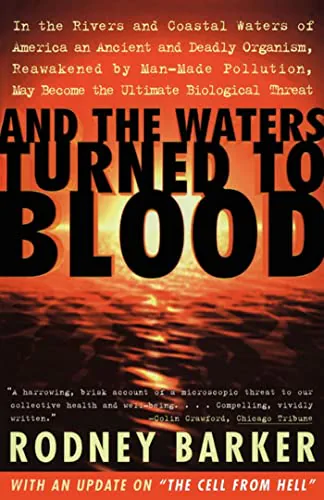
The organism releases a powerful neurotoxin that becomes airborne, causing open sores, cognitive impairment, immune suppression, and memory loss in exposed humans. In laboratory experiments, it was observed swarming around human blood cells and consuming their contents. Barker reveals that 110 North Carolina physicians wrote to Vice President Gore pleading for federal intervention, while state bureaucrats continued to downplay the crisis to protect the tourism and fishing industries.
Callers from North Carolina and surrounding states confirm encounters with mysterious fish kills, unexplained illness, and official silence. Art Bell connects the ecological disaster to the broader theme of environmental reckoning explored in his own book, The Quickening, painting a picture of a coastline in quiet crisis.
Key Moments
40 million fish dead in NC estuaries - 'the cell from hell': Barker recounts arriving in North Carolina in fall 1995 to fish, cancelling because ~40 million fish had died across that summer's estuary kills, and learning at a state meeting about the shape-changing dinoflagellate nicknamed 'the cell from hell.'
Burkholder, the lab assistant, and aerosolized neurotoxin: Barker introduces Dr. JoAnne Burkholder of NC State, who tracked the organism from her lab tanks to the estuaries; she and her lab assistant developed insidious symptoms initially mistaken for premature Alzheimer's, MS, or Parkinson's because the toxin aerosolizes.
Hog farms and tobacco runoff as the trigger: Barker explains that decades of pesticide runoff from NC tobacco farms, combined with the state courting the swine industry to make NC #2 behind Iowa in hog production with lax environmental laws, created the toxic-soup conditions that woke the organism.
The species name: Pfiesteria piscicida: Barker gives the scientific name - Pfiesteria piscicida, Latin for 'fish killer' - and notes Burkholder has now found the organism from Delaware's Chesapeake Bay aquaculture die-off down through South Carolina, Georgia, around Florida to Mobile Bay, Alabama.
Fish AIDS and human immune-system suppression: Barker says ten researchers across six different labs have suffered the symptom range; in fish the organism so suppresses the immune system they call it 'fish AIDS,' and chronically exposed humans show suppression patterns 'not dissimilar from HIV patients.'
Preserved source
From the original ArtBell.com archive
The 2003 commemorative archive preserves the contemporary listing for this broadcast. Links and descriptions reflect the original site and may be outdated.
View the original program listingBooks by This Guest
Selected titles from the guest bibliography. Use them as context for this appearance, not required listening.