April 17, 2001: Pole Shift and Earth Changes - Gordon Michael Scallion
Scallion shares a vivid vision in which he watched the sun rapidly cross the sky in an unnatural direction during summer, followed by intense winds. He interprets this as the crust displacing rather than the entire planet tilting, drawing parallels to the cataclysm that flash-froze the mammoths roughly 12,000 years ago. He points to the current record-breaking sunspot cycle and declining magnetic field as warning signs.
The conversation also covers the unprecedented solar flare activity of cycle 23, the relationship between solar energy and El Nino events, and the Chandler wobble. Art notes aurora borealis visible across the mid-latitudes that very evening, adding real-time synchronicity to Scallion's forecast of a volatile summer ahead.
Key Moments
X-22 mega flare saturated the equipment: Scallion recounts calling Big Bear Solar Observatory the night of the giant flare and being told the X-class reading was saturating the instruments, suggesting a flare possibly stronger than X-22.
Pole shift window: this summer: Scallion narrows his pole-shift timeline to a 1998-2002 window, says the three California precursor quakes already occurred, and identifies the summer of 2001 as the 'hot part' of the window.
The vision on the country road: Scallion describes the vision that prompted this appearance: walking his New Hampshire road, he sees the sun jump from 2 o'clock to 11 o'clock, then a car-wash sensation reveals it is the Earth's crust, not the axis, that has slipped.
300 mph winds for 24-72 hours: Scallion explains why a crustal slip would generate winds: changing the landmass position relative to jet streams while the planet still spins at 1,000 mph would produce sustained winds on the scale of Mount Washington's 300 mph gusts, globally, for up to three days.
Time goes blank after 2012: Scallion says that in seminars where he walks audiences forward decade by decade, both he and the participants reliably stop seeing anything around 2012, then pick up again in the 2020s and 2030s.
Preserved source
From the original ArtBell.com archive
The 2003 commemorative archive preserves the contemporary listing for this broadcast. Links and descriptions reflect the original site and may be outdated.
View the original program listingImages and material referenced by the original site
Books by This Guest
Selected titles from the guest bibliography. Use them as context for this appearance, not required listening.
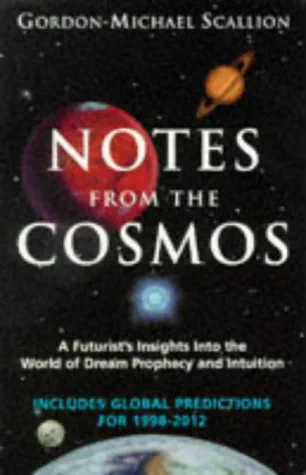
Notes from the Cosmos: A Futurist's Insights Into the World of Dream Prophecy and Intuition
1997
Collection
More in this collection
Continue exploring
Paths out of this episode
Stronger next moves anchored to this specific broadcast.