Faidley explains the science behind the extreme winds, including the intense low-pressure system and pressure gradient that created conditions rivaling the jet stream at ground level. Faidley shares stories from nearly 20 years of professional storm chasing, including his first encounter with an F5 tornado near Red Rock, Oklahoma, where scientists recorded the highest wind speed ever at 318 miles per hour. He describes his custom chase truck equipped with NASCAR-style harnesses and a defibrillator.
The conversation covers the physics of tornadoes versus straight-line winds, the dangers of microbursts to aviation, and a troubling decline in tornado activity that may signal broader atmospheric changes. Faidley notes that the growing number of amateur storm chasers since the movie Twister has created safety concerns on chase days across Tornado Alley.
Key Moments
Pahrump hit by 84 mph straight-line winds: Art opens with a firsthand account of the windstorm that just slammed his Nevada town: sustained 60–70 mph winds, gusts hitting 84 mph for three solid hours, fences down, roofs gone, houses self-destructing into matchwood, McCarran Airport closed. He says nothing like it has happened in his 15 years there.
Why Faidley left news for nature: Faidley explains why he abandoned news photography for storm chasing: the man-against-man violence of news (and now terrorism) felt worthless to die for, while a supercell three times the height of Everest is 'incredibly beautiful' - a force no peace accord can negotiate away.
Faidley's lightning-struck chase truck 'Archangel': Warren Faidley describes Archangel, his custom chase truck - defibrillator, NASCAR five-point harness, roll cage, computers - and recounts being struck by lightning in eastern Colorado, where the bolt knocked out only a driving lamp. He also explains how lightning can blow tires off vehicles.
Inside a dust devil: the wall, the tube, the silence: Faidley recounts riding his bike into dust devils as a kid in 115-degree Arizona heat with welding goggles, and being briefly inside the vortex - describing the dusty yellow wall of debris circling him, the visible tube rising into the sky, and the strange interior pressure.
Tornadoes hinge on one or two degrees in the cap: Faidley explains that on a high-risk severe weather day, whether the plains erupt with tornadoes or stay quiet often comes down to one or two degrees of warming in the upper atmosphere - the 'cap' - and how the jet stream's curves are where chasers know to look.
Preserved source
From the original ArtBell.com archive
The 2003 commemorative archive preserves the contemporary listing for this broadcast. Links and descriptions reflect the original site and may be outdated.
View the original program listingBooks by This Guest
Selected titles from the guest bibliography. Use them as context for this appearance, not required listening.
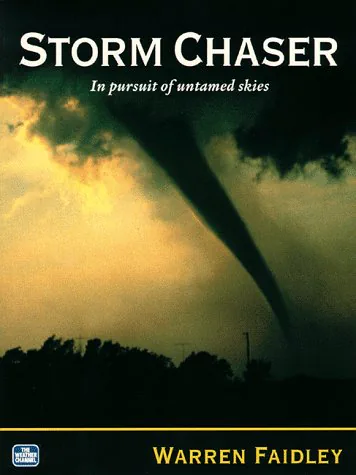
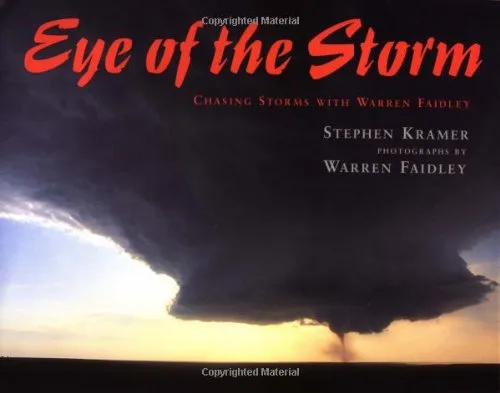
Eye of the Storm : Chasing Storms With Warren Faidley
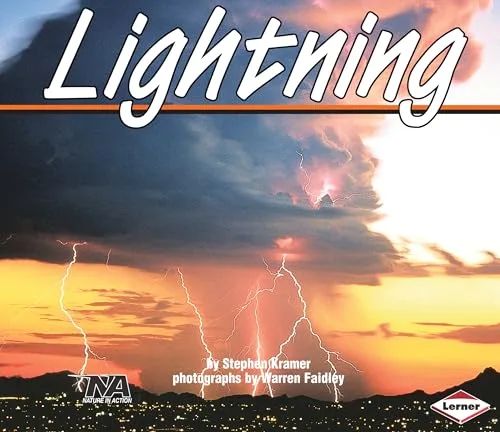
Lightning (Nature in Action)
Continue exploring
Paths out of this episode
A stronger next move anchored to this specific broadcast.