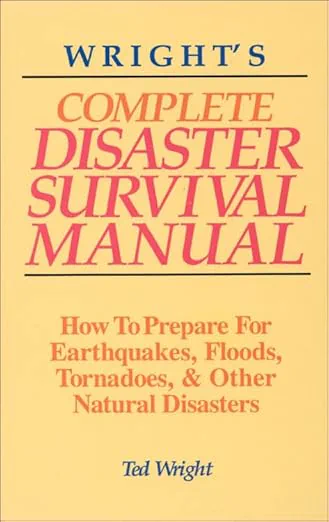
Wright argues that the American public is dangerously unprepared for major disasters, noting the absence of underground shelters in tornado-prone areas and the lack of any viable evacuation plan for major cities. He criticizes the government's approach to nuclear safety, revealing that FEMA concluded it was cheaper to pay for thyroid surgeries than to stockpile potassium iodide pills near the nation's 109 nuclear plants. He also discusses the ongoing crisis at Chernobyl, where fissionable material continues to sink toward the water table.
The conversation covers practical survival topics including water storage, food preservation methods drawn from pioneer-era practices, and the use of Geiger counters to monitor radiation. Wright warns that deteriorating farmland soil combined with extreme weather could trigger food shortages, and he stresses that self-reliance is the only reliable survival strategy.
Key Moments
Don't flee a nuclear or biological strike - hunker down with safe rooms: Wright argues that in a nuclear or biological event, evacuating a city like New York is the worst response - citing Israelis prepping safe rooms and gas masks during the Hussein crisis as the right model. He recommends an airtight backyard shelter rated for 15 days, the dispersal time he gives for Chernobyl-level airborne particles.
Chernobyl's Pripyat decontamination failure: Wright recounts how Soviet authorities waited three weeks after Chernobyl to evacuate Pripyat, then bused contaminated workers in their existing clothes into central Kiev - the buses themselves spreading contamination. He contrasts this with his WWII Italy typhus protocol: tent triage, strip, shave, deluse, fresh clothes.
Cresson Kearney's self-help civil defense doctrine: Wright cites Cold War-era nuclear engineer Cresson H. Kearney, who studied European civil defense and concluded the only hope for Americans is self-help civil defense - and gives the specific numbers he wants the President to broadcast: three months of food, one gallon of water per person per day, 336 gallons (twelve 25-gallon containers) for a family of four.
OPN: Organized Prepared Neighborhoods, modeled on London: Wright introduces his Organization of Prepared Neighborhoods (OPN) program, modeled on how London neighborhoods organized themselves during the Blitz. The community handles its own security patrols rather than every household defending its food stockpile alone.
Preserved source
From the original ArtBell.com archive
The 2003 commemorative archive preserves the contemporary listing for this broadcast. Links and descriptions reflect the original site and may be outdated.
View the original program listingBooks by This Guest
Selected titles from the guest bibliography. Use them as context for this appearance, not required listening.