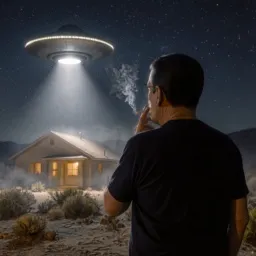
The conversation centers on Hopi prophecy and its connections to current events. Morning Sky identifies the newly discovered comet Hale-Bopp as the Blue Star Kachina, Nangasuhu, and draws linguistic parallels between Hopi, Sumerian, Egyptian, and Babylonian terms for celestial visitors. He suggests that Hopi prophecy predicts a second, larger celestial body will appear approximately seven years after Hale-Bopp, possibly corresponding to what Zecharia Sitchin calls Nibiru. Morning Sky also reveals his translation of the hieroglyphs on the I-beam from the Santilli alien autopsy footage, describing it as a warrior inscription.
Art Bell and Morning Sky discuss the quickening of world events, the birth of six-fingered children on Navajo reservations, and the idea that star beings walk among humanity hiding in plain sight.
Key Moments
Sitting with grandfather watching lights dance in the sky: Morning Sky recalls being taken out as a child by his grandfather to sit on a hillside and watch the lights dance in the sky, framing why so many reported disc crashes occurred on or near Indian reservation land where Native Americans habitually lived under the night sky.
Nangasuhu - the Blue Star Kachina identified as Hale-Bopp: Morning Sky describes the Hopi Blue Star Kachina, Nangasuhu, with its four-pointed black star on a blue face and trailing feather headdress representing a meteor's tail, and ties it directly to the newly discovered Hale-Bopp comet.
Nibiru, Neb-Heru, Nangasuhu - one and the same: Morning Sky links Sitchin's Sumerian Nibiru, the ancient Egyptian Neb-Heru meaning Lord of the Sun, the Babylonian Nindirsu of Lugash, and the Hopi Nangasuhu as the same returning visitor - predicting Hale-Bopp will arrive in 1997 with a blue corona, followed by an older 'big brother' with a white face about seven years later.
Hiding in plain sight - we are the descendants: Morning Sky's central Terra Papers thesis: the gods and devils of the ancient civilizations were star beings who are still here now, but we don't see them because they look like us - we are their descendants.
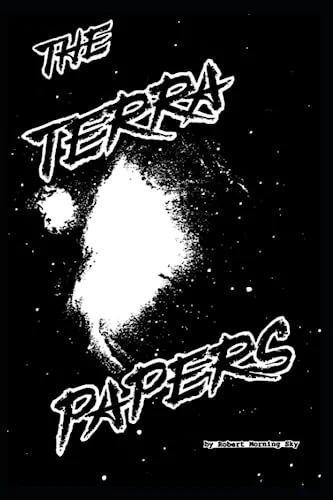
Books by This Guest
Selected titles from the guest bibliography. Use them as context for this appearance, not required listening.
Collection
More in this collection
Continue exploring
Paths out of this episode
Stronger next moves anchored to this specific broadcast.